Praise for Cheshire Police's use of facial recognition technology to track down suspects
By The Editor 18th Nov 2026
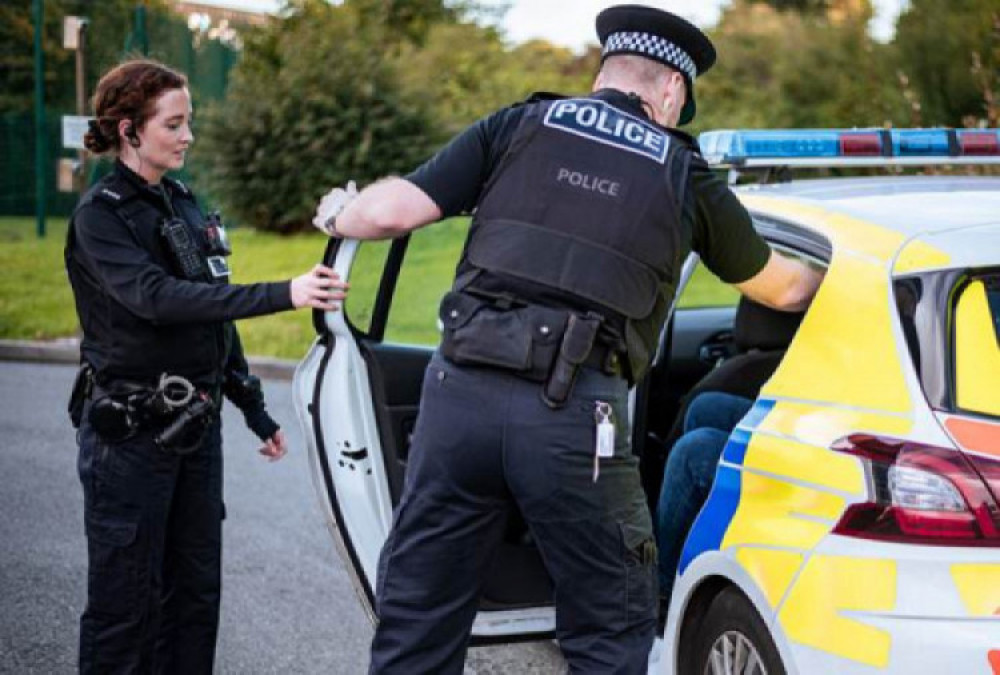

Cheshire Police's use of Retrospective Facial Recognition has been highlighted as best practice following the publication of a national report.
Retrospective facial recognition (RFR) is a tool used to analyse images captured from CCTV, dashcams and social media.
Any outstanding suspects who are matched with national police databases are passed on to an investigating officer and, once the images have been analysed, they are removed from police systems.
A recent report urging police forces across the country to improve their usage of RFR in order to maintain public confidence in the technology has praised Cheshire Police's own usage of RFR.
The report, commissioned by His Majesty's Inspectorate of Constabulary and Fire & Rescue Services (HMICFRS), praised the local force several times.
Cheshire Police's Facial Recognition Team also recently won the Staff Team of the Year award at the internal Achieving Cheshire Excellence (ACE) Awards, with their efforts having increased submissions by 46% and achieved a record 142 positive identifications in a single month.
Chief Inspector Darren Griffiths, Cheshire's head of forensics, said: "The use of facial recognition technology has allowed enquiries into crimes to be progressed at a greater pace as opposed to traditional means of manual image comparison done by hand.
"Retroactive Facial Recognition can positively identify suspects within seconds and with minimal room for error.

"However, as the report from HMICFRS suggests, there are a number of safeguards that need to be implemented to ensure that this continually evolving technology is governed correctly and ensure public confidence in it.
"With that said, I am incredibly proud to see the work of our in-house facial recognition specialists has been recognised on several occasions as exhibiting best practice in terms of usage accountability, training and the wider deployment of the technology itself."
The Chief Inspector also acknowledged concerns surrounding how the technology works and what data it stores.
He added: "We know that people understandably have questions about how the technology works and what it does and doesn't do. It does not store images of the general public, it does not track people, and it is not used for mass surveillance.
"Keeping residents safe is at the heart of everything we do, and RFR just one of the many tools are our disposal to help us locate people who may pose a risk to the public and achieve justice for victims of crime."
In response to the growing usage of facial recognition deployments, the constabulary set up Operation Identifying, to analyse deployment outcomes.
It found that cases involving at least one positive RFR match were more likely to result in a positive outcome, such as arrests and charge.
HMICFRS also highlighted how all Cheshire outcomes of RFR deployments were reported to a weekly crime accountability meeting. Whereas in some other forces, no clear structures were in place to oversee and manage the use of RFR.

Cheshire Constabulary uses its own in-house team to carry out its RFR searches.
Personnel in the department complete a five-day facial recognition training course, provided by the United States Federal Bureau of Investigation (FBI), to ensure that the technology is used effectively, as well as regular proficiency testing to assess their competence in RFR searches.
Between April 2025 and March 2026, Cheshire Police carried out 24,018 retrospective facial recognition searches. Relative to the total number of crimes recorded, this was the highest level of use of any police force in England and Wales.
An example of Cheshire's best practice usage of the technology was highlighted in the report, referencing a case in which officers attended a knife-point robbery in Crewe.
They carried out an urgent RFR search within 10 minutes and identified a suspect seen catching a train to London.
British Transport Police officers were then contacted and stopped the train, arresting the suspect and recovering the stolen property. He subsequently received an eight and half year prison sentence.
Download our Nub News App:
- It’s FREE and available now
- Breaking news notifications
- Your Town in Your Pocket


Share: